Metal Galvanizing Process: The Core Technology and Industrial Application for Metal Anti-Corrosion
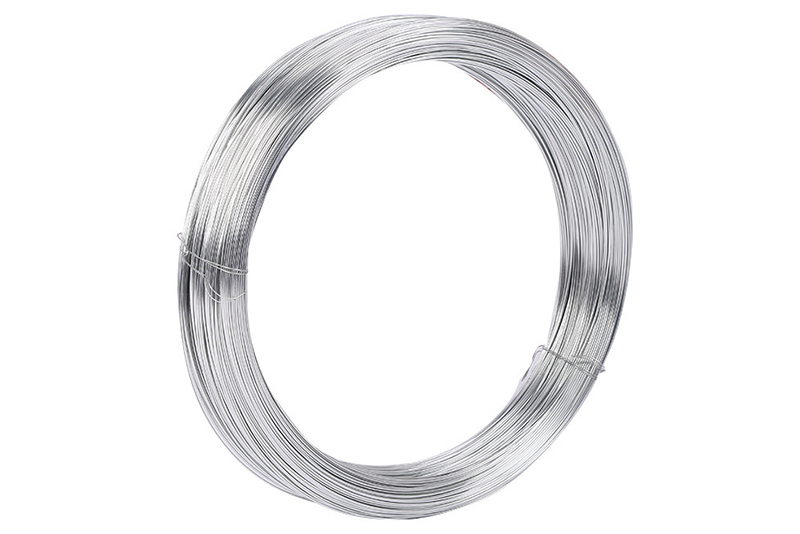
Metal materials serve as the cornerstone of modern industry, extensively penetrating key national economic sectors such as construction, machinery, transportation, and electronics. However, corrosion, the "natural enemy" of metal materials, causes the scrapping of tens of millions of tons of metals globally each year, resulting in economic losses of hundreds of billions of US dollars. With a century of technological accumulation, the metal galvanizing process constructs a dense zinc layer on the surface of metal substrates, forming a dual protection system of "electrochemical protection + physical isolation." It has become the most mature and economical key technology for solving metal corrosion problems. From daily-used iron nails and fasteners to steel structures of cross-sea bridges and core components of new energy vehicles, the galvanizing process has always played an indispensable role in extending the service life of metals and reducing the whole-life cycle cost. This article will systematically dissect the technical principles, mainstream types, and key control links of the galvanizing process, and comprehensively present the application value and evolutionary direction of this "core metal protection technology" in combination with industry development trends.
I. Anti-Corrosion Mechanism: The Scientific Logic of Zinc Layer's "Dual Protection"
The core of the galvanizing process's anti-corrosion capability stems from the unique chemical properties and reaction mechanisms of zinc, forming a dual protection system of "active sacrifice + passive barrier," whose scientificity and stability have been verified through long-term industrial practice.
From the perspective of electrochemical protection, the standard electrode potential of zinc (-0.76V) is significantly lower than that of common substrate metals such as iron (-0.44V) and steel. According to the principle of electrochemical corrosion, when the galvanized layer forms a galvanic cell with the substrate, zinc acts as a "sacrificial anode" and undergoes oxidation preferentially (Zn → Zn²⁺ + 2e⁻), preventing the corrosion of the substrate metal through its own dissolution and consumption. This characteristic endows the galvanized layer with a "self-healing ability"—even if the zinc layer suffers local scratches or damage, the zinc in the undamaged areas can continue to provide cathodic protection for the exposed substrate, avoiding the spread of corrosion. Data shows that in natural environments, the corrosion rate of galvanized parts is only 1/10 to 1/50 that of untreated metal parts.
From the perspective of physical isolation, zinc sequentially generates intermediate products such as zinc oxide (ZnO) and zinc hydroxide (Zn(OH)₂) during oxidation. These substances further react with carbon dioxide and moisture in the air to ultimately form a dense zinc carbonate (ZnCO₃) passivation film. With a porosity of less than 0.1%, this passivation film has a stable structure and is insoluble in water. It can effectively block the contact between corrosive media such as oxygen, moisture, and chloride ions and the substrate, equivalent to putting a "protective armor" on the metal surface. The synergistic effect of electrochemical protection and physical isolation makes the anti-corrosion effect of the galvanized layer far superior to single protection technologies such as painting and spraying, becoming the "gold standard" for long-term metal protection.
II. Three Mainstream Processes: Technical Characteristics and Scenario Adaptation
After a century of technological iteration, the galvanizing process has formed three major technical systems: hot-dip galvanizing, electrogalvanizing, and mechanical galvanizing. Each process has formed differentiated advantages in terms of principles, performance, and cost, accurately matching the application needs of different industries.
(I) Hot-Dip Galvanizing: The "High-Strength Choice" for Heavy Outdoor Anti-Corrosion
Hot-dip galvanizing is currently the most widely used galvanizing process, accounting for over 60% of the global market share. Since its invention in 1836, its technical maturity and reliability have been widely recognized. Its core process flow is: substrate pretreatment (degreasing → pickling → water washing → fluxing) → high-temperature zinc dipping (440-460℃ molten zinc bath) → cooling and passivation → finished product inspection. After the workpiece is immersed in the molten zinc bath, it undergoes a metallurgical reaction with the substrate to form a composite structure of "zinc-iron alloy layer (δ layer) + pure zinc layer (η layer)" with a total thickness usually between 60-150μm.
The core advantage of this process lies in its extreme anti-corrosion performance: high-quality hot-dip galvanized layers can achieve a red rust appearance time of 1000-3000 hours in the Neutral Salt Spray (NSS) test, and a service life of 20-50 years in natural environments, far exceeding other galvanizing processes. In addition, the metallurgical bonding method between the zinc layer and the substrate gives it extremely strong adhesion, which is not easy to peel off after mechanical tests such as bending and impact. Its main limitation lies in surface defects caused by high-temperature treatment—"zinc nodules" (with a thickness of more than 200μm) are likely to form at the edges and corners of workpieces, and the surface roughness Ra value is about 3.2-6.3μm, making it unsuitable for components requiring high dimensional accuracy and surface flatness.
Based on the above characteristics, hot-dip galvanizing is widely used in outdoor heavy anti-corrosion scenarios: construction steel structures (such as factory trusses and bridge supports), power engineering (power transmission towers and substation frames), transportation facilities (highway guardrails and railway track fasteners), oil and gas pipelines and accessories, outdoor fasteners, etc. For example, the steel structure components of China's Hong Kong-Zhuhai-Macao Bridge all adopt hot-dip galvanizing treatment to ensure long-term stable service in the marine high-salt spray environment.
(II) Electrogalvanizing: The "Exquisite Solution" for Precision and Decoration
Electrogalvanizing (also known as cold galvanizing) is a precision galvanizing technology based on the principle of electrolytic deposition. With its excellent surface quality, it has become the preferred choice in the field of precision manufacturing. Its standard process flow is: substrate pretreatment (degreasing → pickling → activation → water washing) → electrolytic deposition (zinc-containing electrolyte, workpiece as cathode + zinc plate as anode) → post-treatment (water washing → passivation → sealing). Under the action of a DC electric field, zinc ions (Zn²⁺) migrate directionally to the workpiece surface and are reduced and deposited to form a uniform pure zinc layer with a thickness that can be precisely controlled between 5-20μm.
The core competitiveness of electrogalvanizing lies in "high precision + high appearance value": the zinc layer has a smooth and delicate surface with a roughness Ra value of only 0.8-1.6μm, which can perfectly retain the original dimensional accuracy of the workpiece with an error of no more than ±1μm; various appearances can be achieved through different passivation processes, such as colored zinc (rainbow passivation), blue zinc (blue passivation), black zinc (black passivation), etc., which have both protective and decorative properties. Its shortcoming is that the anti-corrosion ability depends on the passivation layer—the pure zinc layer itself is relatively thin, and the service life in the neutral salt spray test is usually 200-500 hours, requiring sealing treatment to meet the needs of medium and low corrosion environments.
This process is mainly suitable for precision manufacturing and decoration scenarios: precision fasteners (such as electronic device screws and automotive chassis bolts), electronic hardware accessories (connectors and terminals), auto parts (instrument panel brackets and seat slides), instrument casings, decorative hardware (furniture handles and bathroom accessories), etc. For example, the metal middle frames of smartphones and the screws of laptops all adopt electrogalvanizing technology, which not only ensures anti-corrosion performance but also meets the precise assembly and appearance requirements of products.
(III) Mechanical Galvanizing: The "Customized Solution" for Special Scenarios
Mechanical galvanizing is an electroless and high-temperature-free physical deposition process, specially developed to solve the anti-corrosion problems of high-strength metal parts. Its core principle is to realize the cold welding deposition of zinc powder by mechanical impact force: put the pretreated workpiece, zinc powder, glass beads (impact medium), and accelerator (organic acid system) into a drum. Through the collision and friction force generated by the high-speed rotation of the drum (rotational speed 30-60r/min), the zinc powder is gradually densified and cold-welded to the workpiece surface to form a zinc layer with a thickness of 10-100μm, which is finally completed by passivation treatment.
The biggest technical highlight of mechanical galvanizing is the "no hydrogen embrittlement risk"—in the process of traditional electrogalvanizing and hot-dip galvanizing, the substrate may absorb hydrogen atoms leading to hydrogen embrittlement, while the physical deposition method of mechanical galvanizing completely avoids this problem, making it the only choice for sensitive components such as high-strength fasteners (tensile strength ≥10.9 grade), springs, and elastic elements. In addition, the zinc layer thickness has strong controllability, the surface is free of sagging and zinc nodules, and the adhesion meets the first-class requirements of GB/T 26106-2010 standard. Its disadvantage is low production efficiency, and the unit cost is 30%-50% higher than that of hot-dip galvanizing, making it suitable for small-batch customized production.
Typical application scenarios of this process include: high-strength fasteners (wind power bolts and aerospace rivets), springs (automotive shock absorber springs and engineering machinery springs), medical device accessories (stainless steel surgical instruments), military components, and other metal parts sensitive to hydrogen embrittlement or not resistant to high temperatures.
III. Key Control Links: The "Lifeline" of Pretreatment and Quality Inspection
The final effect of the galvanizing process depends 70% on the quality of pretreatment and 30% on process control and inspection. Omissions in any link will lead to reduced adhesion of the zinc layer and failure of anti-corrosion performance.
(I) Pretreatment: The Premise Guarantee for "Firm Adhesion" of Zinc Layer
The core goal of pretreatment is to remove impurities such as oil, rust, and oxide scale on the workpiece surface, forming a clean and activated metal surface to create conditions for zinc layer deposition. The technical points of each key step are as follows:
Degreasing Treatment: It is necessary to completely remove oil such as mineral oil and animal and vegetable oil. Common processes include alkaline cleaning (5%-10% sodium hydroxide + sodium carbonate mixed solution, temperature 60-80℃, time 10-20 minutes), solvent cleaning (gasoline, ethanol, or environment-friendly organic solvents), and ultrasonic cleaning (power 500-800W, suitable for precision parts). The degreasing effect must meet the "continuous water film" standard—the water film on the workpiece surface is uniform and unbroken after being taken out of water, otherwise, reprocessing is required.
Pickling Treatment: 15%-20% hydrochloric acid solution (room temperature, time 5-15 minutes) or 10%-15% sulfuric acid solution (temperature 40-60℃, time 10-25 minutes) is used to dissolve surface rust, oxide scale, and oxide film. After pickling, 2-3 times of countercurrent water washing must be carried out immediately, and the residual acid concentration must be controlled below 50mg/L to avoid corrosion of the substrate.
Fluxing Treatment (Only for Hot-Dip Galvanizing): The workpiece is immersed in 15%-20% ammonium chloride-zinc chloride mixed solution (temperature 60-80℃, time 3-5 minutes) to form a thin and uniform flux film. This film can prevent the workpiece from re-oxidation before entering the zinc bath, and at the same time reduce the surface tension of the zinc bath, reducing the contact angle of the zinc bath to the substrate from 80° to below 30°, significantly improving the uniformity of the zinc layer.
(II) Quality Inspection: The "Quantitative Standard" for Anti-Corrosion Effect
The quality of the galvanized layer must be quantitatively evaluated through three core indicators to ensure compliance with national standards such as GB/T 13912-2022 (hot-dip galvanizing) and GB/T 9799-2011 (electrogalvanizing):
Thickness Detection: A magnetic thickness gauge (for ferromagnetic substrates) or an eddy current thickness gauge (for non-ferromagnetic substrates) is used. 3%-5% of workpieces are randomly sampled for inspection per batch, and 5-8 points are measured per workpiece. Judgment criteria: ≥80μm for outdoor heavy anti-corrosion parts, 5-15μm for precision parts, and 10-100μm for mechanical galvanized parts as required.
Adhesion Detection: The test method is selected according to the workpiece type: ① Bending test (plates and profiles): bend the workpiece 180°, and the zinc layer is qualified if there is no peeling or blistering; ② Cross-cut test (flat parts): use a blade to cut a 1mm×1mm grid, stick 3M tape and tear it off, and the zinc layer is qualified if the peeling area is ≤5%; ③ Impact test (fasteners): impact with a 500g heavy hammer from a height of 500mm, and the zinc layer is qualified if there is no crack or peeling.
Corrosion Resistance Detection: The Neutral Salt Spray (NSS) test is adopted. The workpiece is placed in a salt spray chamber with 5% sodium chloride solution (temperature 35℃, humidity 95%), continuously sprayed, and the time when red rust appears is recorded. Qualification criteria: ≥1000 hours for hot-dip galvanizing, ≥200 hours for electrogalvanizing (including passivation), and ≥500 hours for mechanical galvanizing.
IV. Industry Development Trends: Environmental Protection, High Efficiency, and Precision
With the transformation of the manufacturing industry towards green low-carbon and high-end intelligence, the galvanizing process is undergoing technological upgrading and industrial transformation, showing three core development trends:
(I) Environmental Protection Transformation: Solving Pollution Pain Points
The environmental shortcomings of traditional galvanizing processes (waste acid, chromium-containing passivation solution, and heavy metal wastewater) have become a bottleneck for industry development. In recent years, driven by strict environmental policies, the industry has accelerated the promotion of clean production technologies: ① Chromium-free passivation replacement: adopt chromium-free passivation systems such as silicate, titanate, and phytic acid, reducing heavy metal content to below 0.1mg/L, which meets the EU RoHS standard; ② Pickling waste liquid recovery: recover hydrochloric acid and sulfuric acid through membrane separation and evaporation crystallization technologies, with a resource recovery rate of over 90% and an 80% reduction in waste liquid discharge; ③ Water-based treatment: develop water-based sealants and water-based degreasers to replace traditional organic solvents, reducing VOCs emissions by more than 70%.
(II) High-Efficiency Production: Enhancing Industrial Competitiveness
The demand for large-scale production has promoted the upgrading of the galvanizing process towards high efficiency: ① In the field of hot-dip galvanizing: the application of automated pretreatment production lines (PLC-controlled, processing speed up to 10m/min) and continuous galvanizing equipment has increased production efficiency by 50% and reduced unit energy consumption by 30%; ② In the field of electrogalvanizing: pulse electroplating and high-speed electroplating technologies (current density increased from 2A/dm² to 10A/dm²) have increased the zinc layer deposition rate by 3 times and shortened the production cycle by 60%; ③ In the field of mechanical galvanizing: intelligent drum control systems (precisely adjusting rotational speed and time) have increased the batch processing capacity from 50kg/batch to 200kg/batch and reduced costs by 20%-30%.
(III) Precision Customization: Adapting to High-End Manufacturing
The personalized needs of high-end manufacturing have driven the galvanizing process towards precision and customization: ① For new energy auto parts, develop customized galvanizing solutions with high corrosion resistance (salt spray test ≥1500 hours) and low hydrogen embrittlement (hydrogen content ≤0.3ppm); ② For precision electronic components, develop ultra-thin zinc layers (thickness 2-5μm) and nano-composite galvanizing technologies to meet the requirements of miniaturization and high reliability; ③ Optimize process parameters through numerical simulation (such as ANSYS and COMSOL software) to achieve precise control of zinc layer thickness and composition with an error within ±0.5μm.
Conclusion
As the "cornerstone" technology in the field of metal anti-corrosion, the metal galvanizing process has continuously radiated new vitality after a century of development. From hot-dip galvanizing for outdoor heavy anti-corrosion to electrogalvanizing for precision manufacturing and mechanical galvanizing for special scenarios, the three major process systems have constructed a metal protection solution covering the entire industry. With the continuous progress of environmental protection technology, automation technology, and materials science, the galvanizing process will evolve towards a more green, efficient, and precise direction, providing more reliable metal protection support for strategic emerging industries such as new energy, aerospace, and high-end equipment. Under the background of the "dual carbon" goal and the high-quality development of the manufacturing industry, the galvanizing process is not only a technical means to solve metal corrosion problems but also an important support for promoting the sustainable development of industry, injecting a steady stream of power into the long-term utilization of metal materials.





 中文
中文