Born of Iron: The Making of a Nail
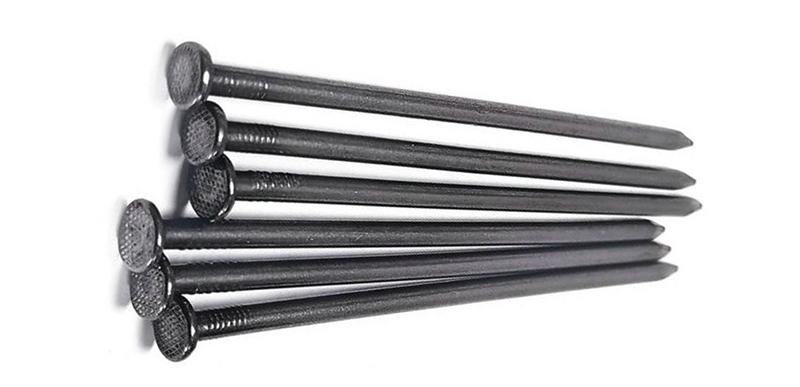
Deep in the darkness of the Earth's crust, hematite has slumbered for hundreds of millions of years. Encased in rock formations, these dark red massive crystals boast a dense, resilient atomic structure—never dreaming they would break free from the Earth's grip to become tiny fulcrums supporting civilization, sharp and upright. As the steel teeth of mining machinery roar through the rock strata, gravel flying, the crimson ore emerges into the light, mixed with rock fragments. Sunlight glints off the rough ore surface, reflecting a metal-specific luster, and the life of a nail is foreshadowed amid this deafening industrial symphony.
The ore is conveyed to a giant crusher, where steel hammers strike repeatedly at a rate of a hundred blows per minute. The hard ore chunks shatter and re-shatter amid the clashing of metal, finally reduced to fist-sized pellets. This step not only reduces volume but also breaks the adhesive bonds between impurities within the ore, clearing the way for subsequent purification. Next, these pellets travel along an inclined conveyor belt into a ball mill, where thousands of alloy steel balls tumble, collide, and grind as the cylinder rotates. Over three hours of continuous operation, the machine emits a deep rumble; friction between the steel balls and ore generates subtle heat, transforming the hard ore into fine crimson powder—finer than flour—like the Earth shedding its rigid outer shell to reveal a scorching, pure core.
As the ore powder passes through a magnetic separator, a strong magnetic field acts like an invisible sieve, thoroughly separating ferromagnetic ore powder from impurities such as silicates. The impurities are carried away by a conveyor belt, while the pure ore powder falls into a collection bin, awaiting its next transformation. Afterwards, the ore powder is mixed with limestone (to adjust slag fluidity) and coke (to provide heat and reducing agents) in a precise ratio of 10:3:4, then fed into a blast furnace heated to 1,200 degrees Celsius. Inside the furnace, burning coke releases intense heat, with flames glowing a dazzling blue-white. Chemical energy and thermal energy interact to reduce iron oxide in the ore powder to molten iron. The dark red molten iron slowly accumulates at the furnace bottom, with a layer of grayish-brown slag floating on the surface—like a sleeping fire dragon gathering strength for transformation amid the extreme heat.
The molten iron is channeled into a converter via a launder. High-pressure oxygen is blown into the furnace at 5 meters per second, reacting violently with carbon in the molten iron to produce carbon dioxide gas, which gushes out of the furnace mouth with blinding sparks. This step, known as "steelmaking," aims to reduce the carbon content in the molten iron from over 4% to below 0.2%, transforming brittle pig iron into more ductile low-carbon molten steel. When the molten steel reaches 1,500 degrees Celsius, the bright white liquid is cast into long, thin billets, which cool naturally on a cooling table. As the temperature drops from 1,000 degrees to room temperature, a layer of grayish-blue scale forms on the billet surface—a protective film formed by the metal's contact with air, yet one that will be stripped away in subsequent processes.
These billets are reheated to 1,000 degrees Celsius in a heating furnace. At this temperature, the steel takes on a soft dark red hue, easily dented with a light prod of a metal rod, as malleable as leavened dough. The billets are then fed into a steel rolling mill, where two sets of grooved rollers rotate at high speed in opposite directions, repeatedly pressing and stretching the billets. Each roll is accompanied by the sound of metal stretching; the billet's diameter gradually decreases while its length increases, eventually becoming wire rod 3-5 millimeters in diameter. This slender steel rod is the original skeleton of a nail, bearing the core mission of transforming from ore to tool.
First, the wire rod enters a pickling tank. A 30% concentration hydrochloric acid solution dissolves the surface scale while creating a rough texture on the rod—laying the groundwork for subsequent wire drawing and electroplating. After pickling, the rod is rinsed with clean water, dried, and fed into a wire drawing machine. Dozens of drawing dies with gradually decreasing apertures are arranged in a line. Guided by traction, the rod passes through the dies in sequence, with its diameter precisely controlled within a tolerance of 0.01 millimeters, finally becoming a uniform steel wire. Next, the wire is sent to a nail-making machine, where punches strike with pinpoint accuracy three times per second: one end is pressed into a triangular sharp point (to reduce penetration resistance), and the other is forged into a flat head with anti-slip grooves (for easy hammering and force distribution). Each punch is accompanied by a crisp "ding-ding-dang-dang," as the metal undergoes instantaneous plastic deformation—like the rhythm of breathing life into this steel wire.
The formed nails undergo a critical quenching process: they are heated in an 850-degree Celsius salt bath furnace for 15 minutes to fully austenitize the internal metal crystals, then quickly immersed in 20-degree Celsius cold water. The drastic temperature difference instantly transforms the crystal structure into martensite, increasing the nail's hardness from HB200 to over HRC45 while enhancing its toughness. It can now withstand the impact of hammering without bending or breaking. After cooling, the nails are sent to electroplating tanks, where they are coated with zinc, copper, or chromium depending on their purpose: nails for outdoor use receive a 50-micron hot-dip galvanized layer to form a dense barrier against wind and rain; those for furniture are copper-plated for both aesthetics and rust resistance; and nails for precision instruments undergo phosphating to improve adhesion with glue. In the electroplating tank, a weak electric current ensures uniform adhesion of metal ions to the nail surface, like an invisible armor.
Finally, after sorting by automated equipment (removing products with incorrect dimensions or surface defects), counting (precisely packaging 1,000 nails per bag), and packaging, the nail—transformed from ore—joins thousands of its counterparts on a truck bound for construction sites, furniture factories, and repair workshops. It may be driven by a carpenter's hammer to connect two solid wood planks, supporting the roof truss of a house; it may be fixed to a wall by an electrician to secure wire sleeves, ensuring the city's power supply; it may be used by a repair worker to mend a beloved toolbox, extending its service life; or it may even be employed in ancient book restoration, gently securing torn pages to preserve the marks of civilization.
From ore slumbering for eons to a practical tool forged through crushing, grinding, smelting, forging, and refining, the birth of a nail is a microcosm of human industrial wisdom. It is a celebration of life where metal dances with flame, and hardness coexists with precision. Without a fancy appearance or complex structure, it carries the mission of connecting, fixing, and supporting with its steel body. In the steel frames of skyscrapers, in the tables and chairs of countless households, and in the tiny corners of urban operation, countless nails stand like silent soldiers, supporting grand civilizations with their small forms—becoming indispensable fulcrums that build the world.





 中文
中文