




Tel: +86 13962293381(Valid WhatsApp)
Email: 1257559424@qq.com
 中文
中文
Tel: +86 13962293381(Valid WhatsApp)
Email: 1257559424@qq.com
中文
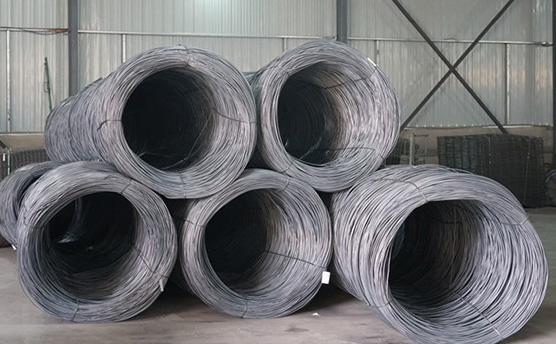
Ordinary wood nails: The ductility of wire rod directly determines the qualification rate of drawing and stamping forming. High-quality low-carbon steel wire rod can control the processing wire breakage rate within 0.3%;
High-strength nails (concrete nails, powder-actuated nails): The carbon content and mechanical properties of wire rod are the core guarantees for "penetrating hard substrates". Medium-carbon steel wire rod can meet the requirements of concrete wall fixation after heat treatment;
Outdoor rust-proof nails: The material composition of wire rod is the fundamental defense against humid, salt spray, and other corrosive environments. 304/316 stainless steel wire rod can extend the service life of nails to more than 10 years in outdoor environments.
Core Parameters: Carbon content 0.06%~0.22%, mainstream grades include national standard Q195, Q215, Q235, and American standard SAE1006, SAE1008; elongation rate ≥20%, tensile strength 300~400MPa;
Core Advantages: Excellent ductility, capable of withstanding 5~8 passes of continuous drawing deformation; the fracture rate at the connection between the nail shank and head during stamping is cost, suitable for large-scale industrial production with an annual output of over 1,000 tons;
Adaptable Scenarios: Ordinary round nails, wood nails, packaging nails, corrugated nails, and other daily-use nails, widely used in construction formwork fixing, panel furniture assembly, carton packaging, indoor decoration, etc.;
Key Selection Points: Diameter tolerance ≤ ±0.1mm, diameter fluctuation of the same coil ≤0.05mm; surface free of scars and scale (thickness ≤0.02mm) to avoid wear of drawing dies (high-quality wire rod can extend die life by 30%).
Core Parameters: Carbon content 0.25%~0.60%, common grades 35#, 45#, SAE1045; tensile strength ≥500MPa; hardness can reach HRC45~55 after quenching + tempering treatment;
Core Advantages: Excellent impact resistance and wear resistance, capable of easily penetrating C30 concrete, MU10 brick walls, and hard solid wood (e.g., redwood, oak); single nail load-bearing capacity up to 500kg or more;
Adaptable Scenarios: High-strength special nails such as concrete nails, powder-actuated nails, twist nails, and self-tapping screws, suitable for load-bearing wall fixation in construction, steel structure connection, outdoor guardrail installation, heavy equipment base fixation, etc.;
Key Selection Points: Strictly control sulfur (S ≤0.04%) and phosphorus (P ≤0.04%) content to avoid "hot brittleness" and "cold brittleness" defects; plan annealing pretreatment in advance (heating to 650~700℃, holding for 2~3 hours), with hardness ≤HB180 after annealing to improve processing ductility.
Core Parameters: Mainly austenitic stainless steel, grades 201, 304, 316; carbon content ≤0.08%; chromium (Cr) content 16%~18% (for 304/316); nickel (Ni) content 8%~10% (for 304);
Core Advantages: 201 stainless steel is suitable for general humid environments with humidity ≤80%; 304 stainless steel has neutral salt spray corrosion resistance ≥48 hours; 316 stainless steel can resist coastal salt spray and chemical acid-base environments, no additional rust-proof treatment required on the surface;
Adaptable Scenarios: Rust-proof nails, outdoor special nails, kitchen and bathroom decorative nails, medical device fixing nails, used in coastal villa construction, landscape facilities, high-end custom furniture, kitchen and bathroom appliances, medical equipment assembly, etc.;
Key Selection Points: Select grades according to corrosion level (201/304 for general humidity, 316 for strong corrosion); pay attention to cold working performance (elongation after fracture ≥40%) to ensure no cracks or burrs during drawing.
Core Parameters: Pure copper (T2, copper content ≥99.9%), brass (H62, copper 60.5%~63.5%, zinc balance); elongation rate ≥30%; Brinell hardness HB35~45;
Core Advantages: Soft texture yet strong toughness; after processing, the surface presents a natural metallic luster (bright red for pure copper, golden yellow for brass); excellent oxidation resistance, no rust or discoloration after long-term use;
Adaptable Scenarios: Copper nails, antique decorative nails, jewelry box special nails, ancient building restoration nails, applied in the protection of Ming and Qing ancient buildings, high-end craft assembly, luxury packaging, decorative hardware, etc.;
Key Selection Points: For pure copper, control oxygen content ≤0.01% (to avoid brittle fracture); for brass, control lead content ≤0.03% (environmental protection requirements) to ensure no delamination or brittle fracture during processing.
Standard Requirement: Diameter tolerance ≤ ±0.1mm, diameter fluctuation of the same coil ≤0.05mm;
Testing Method: Use a digital caliper with an accuracy of 0.01mm to select 15 test points at the head, middle, tail, and circumferential direction of the wire rod, and calculate the average value and deviation;
Adverse Impact: Uneven diameter will lead to nail shank thickness deviation >0.15mm after drawing, unbalanced force during head forming, and nail head deflection rate >3%, directly affecting nail assembly accuracy.
Standard Requirement: Smooth surface, free of cracks, scars, scale, and rust (rusted area ≤0.5%);
Testing Method: Visual inspection of each coil (illumination intensity ≥500lux); gently brush the surface with a steel wire brush (pressure 0.5kg); qualified if scale shedding area ≤5%;
Adverse Impact: Excessively thick scale (>0.03mm) will increase the wear rate of drawing dies by 50%; surface cracks will cause the drawing wire breakage rate to soar to more than 8%; rust will reduce the adhesion of the galvanized layer (peeling area >10% in cross-cut test).